 Founded in 2161 as part of the United Federation of Planets charter, Starfleet has
stood for more than two hundred years as a symbol of courage and integrity. Tried,
tested, and never found wanting, Starfleet was chartered under the instruction "to
boldly go where no one has gone before." Starfleet is also the transport and defense
arm of the United Federation of Planets, and is composed of some 22,000 spaceworthy
vessels, from packets and runabouts up to large exploratory vessels, from minor
planetary bases to the Superstation in the Triangle.
Founded in 2161 as part of the United Federation of Planets charter, Starfleet has
stood for more than two hundred years as a symbol of courage and integrity. Tried,
tested, and never found wanting, Starfleet was chartered under the instruction "to
boldly go where no one has gone before." Starfleet is also the transport and defense
arm of the United Federation of Planets, and is composed of some 22,000 spaceworthy
vessels, from packets and runabouts up to large exploratory vessels, from minor
planetary bases to the Superstation in the Triangle.
Starfleet is made up of five primary branches: Exploration, Military, Transport,
Resource, and Intelligence. There are also a number of sub-branches reporting to
each of the five major ones. Each branch uses different styles of vessels for its
needs, and even similar vessels used by different branches may differ in
configuration.
Transport, easily the largest branch of Starfleet in terms of ship tonnage,
operates some 9,500 inter- and intrasystem transports, runabouts, and shuttles
between Federation member worlds. The vast majority of these ships operate on
standard routes between planets and Starbases. A typical Federation member system
might support between 20 and 25 of these ships on intrasystem work between the
primary planets in the system, and another dozen operating as regularly scheduled
flights to nearby systems.
 The majority of Transport's intersystem work is handled by Yellowstone
class Runabouts. These small ships carry a crew of two, and up to a dozen passengers
at speeds exceeding warp 5. A typical Danube class ship route is the Earth-Mars-Vulcan
run, which has been operating without interruption for more than 200 years, handled by
various small ship classes. At any given time, there are three Danube class ships on
this route. Within systems, Transport generally uses type seven and ten shuttlecraft,
as well as type nine cargoshuttles. These are known as "packets," and comprise the
bulk of intrasystem Federation traffic.
The majority of Transport's intersystem work is handled by Yellowstone
class Runabouts. These small ships carry a crew of two, and up to a dozen passengers
at speeds exceeding warp 5. A typical Danube class ship route is the Earth-Mars-Vulcan
run, which has been operating without interruption for more than 200 years, handled by
various small ship classes. At any given time, there are three Danube class ships on
this route. Within systems, Transport generally uses type seven and ten shuttlecraft,
as well as type nine cargoshuttles. These are known as "packets," and comprise the
bulk of intrasystem Federation traffic.
Typical of the missions assigned to these vessels
is the so-called "Jovian Run" in the Sol system. Handled by a single type seven
shuttlecraft, the Jovian Run is the standard passenger service running from Mimas
and Titan, orbiting Saturn, to Europa and Ganymede, orbiting Jupiter. Because of
the large number of Starfleet facilities operating near these two planets (such as
the Starfleet Academy Flight Range, near Mimas), a commissioned Starfleet vessel
is made available on this route.
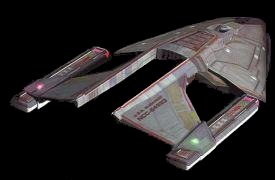 The Transport branch also operates a smaller number of tugs, freighters, and
"Captain's Yacht" style vessels for intersystem work. In addition, however,
Transport also possesses a number of the Norway class starships, commissioned
in the 2370s. Obstensibly a multi-mission ship, the Norway class is built primarily
for speed and survivability. Norways are only lightly armed and carry a crew of
less than 100 people on most missions. Part blockade runner, part ambassadorial
transport, the Norway class vessels are intended as the solution for systems under
seige, high-speed transport, and transport to areas that are difficult to reach.
The commanding officers of these high-speed transports have a "daredevil" reputation --
a reputation that they very much deserve.
The Transport branch also operates a smaller number of tugs, freighters, and
"Captain's Yacht" style vessels for intersystem work. In addition, however,
Transport also possesses a number of the Norway class starships, commissioned
in the 2370s. Obstensibly a multi-mission ship, the Norway class is built primarily
for speed and survivability. Norways are only lightly armed and carry a crew of
less than 100 people on most missions. Part blockade runner, part ambassadorial
transport, the Norway class vessels are intended as the solution for systems under
seige, high-speed transport, and transport to areas that are difficult to reach.
The commanding officers of these high-speed transports have a "daredevil" reputation --
a reputation that they very much deserve.
Next largest in terms of starship tonnage is the Resource branch of Starfleet.
Primarily devoted to maintaining stability within Federation systems, Resource is
the branch of Starfleet tasked with maintaining Starbases, subspace communications
relays, tankers, and 'fleet matériel. Some 4,500 warp-capable vessels are part of this
branch of the fleet. Resource is also charged with the maintenance of Starfleet
scientific facilities such as the Remmler Array, the Amagosa Observatory, and the
Mutara One Space Station.
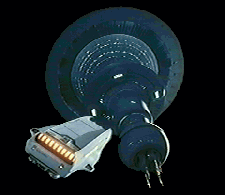 Easily the largest and most impressive of the Resource facilites are the large
spaceborne Ournal class Starbases. Able to accomodate dozens of Starfleet
starships at a time, the Ournal class Starbase is a strong sign of Starfleet interest
and protection in a system, as well as a safe haven and a place to repair for
starships in the other branches of Starfleet. They also provide staging areas for
the Transport branch. Resource also maintains smaller K-7 and Regula class space
stations, Outpost class facilities along the Romulan Neutral Zone, and alien
starbases under Starfleet control or administration, such as Deep Space Five, Deep
Space Nine, and Farpoint Station.
Easily the largest and most impressive of the Resource facilites are the large
spaceborne Ournal class Starbases. Able to accomodate dozens of Starfleet
starships at a time, the Ournal class Starbase is a strong sign of Starfleet interest
and protection in a system, as well as a safe haven and a place to repair for
starships in the other branches of Starfleet. They also provide staging areas for
the Transport branch. Resource also maintains smaller K-7 and Regula class space
stations, Outpost class facilities along the Romulan Neutral Zone, and alien
starbases under Starfleet control or administration, such as Deep Space Five, Deep
Space Nine, and Farpoint Station.
The largest of the Ournal class facilities is the Superstation, located in the
Triangle, equidistant from the Romulan and Klingon borders. Established in the
late 2370s as a show of Federation strength and unity following the Dominion War,
the Superstation is a haven for starships from all three powers.
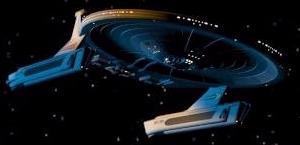 It is the Resource branch, rather than Transport, that provides colonization matériel
and regular deliveries of trade goods to outlying systems. For this reason, Resource
ships are generally armed with defensive weapons. For these roles, the Miranda
class starship is a typical choice for its interchangeable components, small crew
requirements, and large storage capacity. A Miranda operating under the Resource
banner will typically have a crew of 12. Though more than 100 years old, the Miranda
class design is simple to maintain and can be built in less than a year, making it
ideal for Resource duties.
It is the Resource branch, rather than Transport, that provides colonization matériel
and regular deliveries of trade goods to outlying systems. For this reason, Resource
ships are generally armed with defensive weapons. For these roles, the Miranda
class starship is a typical choice for its interchangeable components, small crew
requirements, and large storage capacity. A Miranda operating under the Resource
banner will typically have a crew of 12. Though more than 100 years old, the Miranda
class design is simple to maintain and can be built in less than a year, making it
ideal for Resource duties.
With some 3,500 starships reporting, the Military branch of Starfleet is the
next largest. The Military branch, which is concerned with the defense of Federation
borders, as well as Starfleet and Federation facilities, both on member and non-member
worlds, is easily the most controversial branch of Starfleet. Many feel that an
organization primarily devoted to exploration should not require the services of such
a large, heavily-armed force. However, Federation space is vast -- 172 systems spread
across 9,000 light-years in Alpha and Beta quadrants, plus a significant foothold in
Gamma quadrant. Unfortunately, the Federation does not control every system
within its borders, allowing small single races (such as the Tamarians) and even
multi-system unions (such as the First Federation and the Tholian Assembly) within its
borders. For that reason, defense of Federation systems and borders is a vital
consideration.
 The Military branch's most common ship is the Vigilant class scout. A relatively
new class heavy on speed and agility, a Vigilant will sport a crew of 36, and generally
operates in flights of three ships. Such a flight, sometimes referred to as a "wing"
is assigned to each sector of Federation space which adjoins a Neutral or Threat force
border. Currently, there are some 350 wings of such ships, some modified for unique
mission profiles, such as pursuit, intelligence gathering, electronic countermeasures,
and armed supply. Designed following the Dominion War, Vigilants are virtually all engine
and are incredibly quick and agile. While not the most comfortable ships, they are quite
survivable and one of the mainstays of Federation space.
The Military branch's most common ship is the Vigilant class scout. A relatively
new class heavy on speed and agility, a Vigilant will sport a crew of 36, and generally
operates in flights of three ships. Such a flight, sometimes referred to as a "wing"
is assigned to each sector of Federation space which adjoins a Neutral or Threat force
border. Currently, there are some 350 wings of such ships, some modified for unique
mission profiles, such as pursuit, intelligence gathering, electronic countermeasures,
and armed supply. Designed following the Dominion War, Vigilants are virtually all engine
and are incredibly quick and agile. While not the most comfortable ships, they are quite
survivable and one of the mainstays of Federation space.
On Threat force borders, the Vigilant scout wings are generally supported by a single
Artemis class destroyer. The Artemis is one of the newest designs in Starfleet,
and has proven to be both resilient and survivable. It is the replacement for the
Excelsior class ships which have been recently retired, and is an admirable
successor.
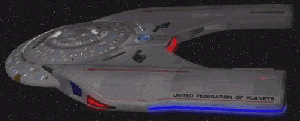 Artemis class ships are fast, maneuverable, well-armed, and almost endlessly upgradable.
The Military branch of Starfleet makes use of some 200 Artemis class starships, and more
are being produced every month. Crew sizes on Artemis class ships range from 48 to 70,
depending on mission profile. Artemis class ships are also noteworthy for their crew
comforts, which are comprable to much larger ships. For that reason among others, duty
on these vessels is much sought-after.
Artemis class ships are fast, maneuverable, well-armed, and almost endlessly upgradable.
The Military branch of Starfleet makes use of some 200 Artemis class starships, and more
are being produced every month. Crew sizes on Artemis class ships range from 48 to 70,
depending on mission profile. Artemis class ships are also noteworthy for their crew
comforts, which are comprable to much larger ships. For that reason among others, duty
on these vessels is much sought-after.
Supplementing the Starfleet Military branch is the Starfleet Marine Corps. Tasked with the
protection of Federation and Starfleet facilities on member and non-member worlds, as well
as ground defense of potential military targets, the Marines are an outstanding asset to
the 'fleet. They are also the primary force coordinating capture and holding of enemy
starships and facilities. Established during the Federation/Klingon Four Years War, the
Marines and the Frigate class that carries them into combat were an outgrowth of a discovery
following first year of that conflict.
 After large-scale battles resulting in Starfleet victories, there was a necessary period of
consolidation before an advance could be pressed, and advantage taken of the enemy's weakened
state. During this period, Klingon starships were often disabled on the battlefield and had
to be captured. This resulted in a lengthy delay, as the Security forces of several starships
had to be consolidated to take the ship with acceptable tactical losses.
After large-scale battles resulting in Starfleet victories, there was a necessary period of
consolidation before an advance could be pressed, and advantage taken of the enemy's weakened
state. During this period, Klingon starships were often disabled on the battlefield and had
to be captured. This resulted in a lengthy delay, as the Security forces of several starships
had to be consolidated to take the ship with acceptable tactical losses.
 The Starfleet Marine Corps was established with this primary mission in mind. Following such
a large scale battle, armed frigates would enter the battlefield and secure enemy starships
and facilities while the main bulk of the 'fleet pressed on toward the objective. This denies
the enemy a chance to recover following a loss. For this reason, since that time, frigates of
one design or another have been an integral part of Starfleet. Today's premiere frigate design
is the Katana class. Carrying a crew of just over 240, as well as 120 Marines,
the Katana class is supremely equipped to her mission of capture of enemy facilities and starships.
Though relatively lightly armed, the Katana class is also fast -- most are also equipped with the
latest propulsion technologies, making them "quick response" ships to trouble spots.
The Starfleet Marine Corps was established with this primary mission in mind. Following such
a large scale battle, armed frigates would enter the battlefield and secure enemy starships
and facilities while the main bulk of the 'fleet pressed on toward the objective. This denies
the enemy a chance to recover following a loss. For this reason, since that time, frigates of
one design or another have been an integral part of Starfleet. Today's premiere frigate design
is the Katana class. Carrying a crew of just over 240, as well as 120 Marines,
the Katana class is supremely equipped to her mission of capture of enemy facilities and starships.
Though relatively lightly armed, the Katana class is also fast -- most are also equipped with the
latest propulsion technologies, making them "quick response" ships to trouble spots.
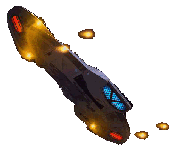 An extremely effective addition to the Military branch's arsenal has been the Defiant
class escort. The Defiant class is a radical departure from traditional Starfleet designs.
Extremely maneuverable, and mounting a pulse phaser cannon, ablative armor, heavy shields, and
quantum torpedoes, the Defiant class was intended as an anti-Borg weapons system. However, its
effectiveness against Jem'Hadar and Cardassian ships and tactics in the Dominion War is the stuff
of legend.
An extremely effective addition to the Military branch's arsenal has been the Defiant
class escort. The Defiant class is a radical departure from traditional Starfleet designs.
Extremely maneuverable, and mounting a pulse phaser cannon, ablative armor, heavy shields, and
quantum torpedoes, the Defiant class was intended as an anti-Borg weapons system. However, its
effectiveness against Jem'Hadar and Cardassian ships and tactics in the Dominion War is the stuff
of legend.
Though difficult to construct and maintain, the Defiants can withstand a stunning amount of
punishment and remain operational and battle-worthy. They carry a crew between 40 and 60, and
along with the Artemis class, have been an effective replacement for the 'fleet's Excelsior and
Miranda class ships in the Military branch.
Surprisingly, the Intelligence branch of Starfleet is the next largest in terms of ship
tonnage. Sporting some 2,500 warp-capable starships, the Intelligence branch's charter is
extremely broadly defined to include research and scientific intelligence as well as political
and military intelligence. The Department of Temporal Investigations is another important
subsection of this branch of Starfleet.
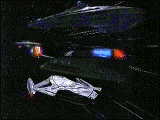 Chief among current Intelligence branch designs is the Prometheus class cruiser. Boasting
an extremely high top speed and a unique "Multi-Vector Assault Mode," the Prometheus class fills
the important scout role for many Starfleet task forces and fleets. Its extremely powerful sensor
array is also an effective tool in its missions. It can also act as a targetting platform for a
number of other Starfleet vessels in the vicinity, allowing them to remain relatively masked while
only the Prometheus exposes itself. The biometric systems associated with its multi-vector assault
mode also allow it to coordinate attacks from many Starfleet vessels, multiplying their effectiveness.
Chief among current Intelligence branch designs is the Prometheus class cruiser. Boasting
an extremely high top speed and a unique "Multi-Vector Assault Mode," the Prometheus class fills
the important scout role for many Starfleet task forces and fleets. Its extremely powerful sensor
array is also an effective tool in its missions. It can also act as a targetting platform for a
number of other Starfleet vessels in the vicinity, allowing them to remain relatively masked while
only the Prometheus exposes itself. The biometric systems associated with its multi-vector assault
mode also allow it to coordinate attacks from many Starfleet vessels, multiplying their effectiveness.
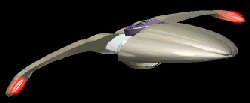 In its role as a provider of military intelligence, the Intelligence branch of Starfleet also uses
many Odin class interceptors. Tasked with high-speed intelligence gathering, intercept of
incoming Threat force fleets, and reconnaissance, the Odin class has proved to be highly successful.
Its unusual design is geared toward one thing: pure speed. The Odin class ships are some of the
fastest in the fleet; the Military branch uses a few of these ships as well, primarily for
intercept duties along the border.
In its role as a provider of military intelligence, the Intelligence branch of Starfleet also uses
many Odin class interceptors. Tasked with high-speed intelligence gathering, intercept of
incoming Threat force fleets, and reconnaissance, the Odin class has proved to be highly successful.
Its unusual design is geared toward one thing: pure speed. The Odin class ships are some of the
fastest in the fleet; the Military branch uses a few of these ships as well, primarily for
intercept duties along the border.
When considering the roles of Starfleet Intelligence, very few in Federation circles remember
that this branch's mission also includes follow up missions on unusual phenomenon discovered
by the Exploration branch. Pure science vessels are an important part of Intel's work, and
should be for many years to come.
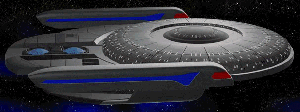 Recently updated for the 2390s, the beautiful Oberth class scout is still a popular
design in Starfleet Intelligence. Requiring only a minimal crew, the Oberth class is one of
the most common in Starfleet, with more than 500 of these vessels in service. These ships
are only lightly armed, but are fast and feature an excellent sensor and electronic
countermeasures suite. Oberth class ships are also commonly used as test platforms for new
technologies.
Recently updated for the 2390s, the beautiful Oberth class scout is still a popular
design in Starfleet Intelligence. Requiring only a minimal crew, the Oberth class is one of
the most common in Starfleet, with more than 500 of these vessels in service. These ships
are only lightly armed, but are fast and feature an excellent sensor and electronic
countermeasures suite. Oberth class ships are also commonly used as test platforms for new
technologies.
During a design study conducted in the 2370s, the Intelligence branch reviewed all of the
major classes in Starfleet and attempted to look for common elements used in all five branches.
The ultimate goal would be to produce a class of starship that could be used effectively to
complete the primary missions of all five branches of the fleet without significant modifications.
This would greatly reduce the number of class specialists and unique design characteristics of the
various classes of Starfleet vessels.
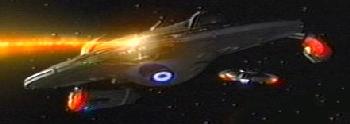 The result was the Akira class starship. Fast, easy to maintain, maneuverable, and
sporting both a sophisticated weapons system and an advanced sensor array, the Akira is a
true jack-of-all-trades. Unfortunately, this sometimes comes at the expense of being "the
master of none." Due to their relatively simple design and tight cross section, many of
these ships were produced in the 2370s and 80s and are still in use.
The result was the Akira class starship. Fast, easy to maintain, maneuverable, and
sporting both a sophisticated weapons system and an advanced sensor array, the Akira is a
true jack-of-all-trades. Unfortunately, this sometimes comes at the expense of being "the
master of none." Due to their relatively simple design and tight cross section, many of
these ships were produced in the 2370s and 80s and are still in use.
Finally, with some 2,000 starships, the Exploration branch is the smallest but easily
the most prestigious branch in Starfleet. Tasked with the mission "to boldly go where no one
has gone before," the Exploration branch is at the forefront of research and scientific
endeavor.
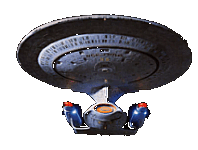 Leading the way among current Exploration branch designs are the massive Galaxy class
starships. One of the largest ships in Starfleet, the Galaxy class is nevertheless fast,
magnificently equipped, survivable, and easy to maintain. Unfortunately, due to the extreme
expense of construction of this class, only a limited number are commissioned at any given time.
In addition, their crew requirements (over 1000) and the limited number of Starbases that can
accept a ship of this size limit their usefulness. Nevertheless, Galaxy class explorers have
come to symbolize the true spirit of exploration in the 'fleet. As much a floating community as a
starship, the Galaxy class ships are the new ambassadors to prospective Federation members,
representing the best in all of us.
Leading the way among current Exploration branch designs are the massive Galaxy class
starships. One of the largest ships in Starfleet, the Galaxy class is nevertheless fast,
magnificently equipped, survivable, and easy to maintain. Unfortunately, due to the extreme
expense of construction of this class, only a limited number are commissioned at any given time.
In addition, their crew requirements (over 1000) and the limited number of Starbases that can
accept a ship of this size limit their usefulness. Nevertheless, Galaxy class explorers have
come to symbolize the true spirit of exploration in the 'fleet. As much a floating community as a
starship, the Galaxy class ships are the new ambassadors to prospective Federation members,
representing the best in all of us.
Their sheer size and weapons component make their presense a notable one, and the abilities of
this class make them incredibly survivable in the final frontier. Finally, their science and
research facilities are some of the best ever put into space, by anyone. Their crew comforts
make the Galaxy class the single most requested type of ship by Starfleet Academy graduates.
Though few in number, the Galaxy class explorers make an impression out of all proportion to
their numbers!
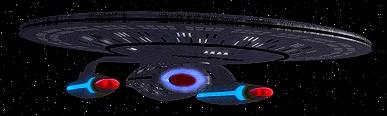 More common in the Exploration branch are the Nebula class explorers. Nearly as
impressive as the Galaxy class, Nebula class ships have much lower crew and refurbishment
requirements, and require fewer resources to construct. The Nebula class features the same
components and research facilites as its larger twin.
More common in the Exploration branch are the Nebula class explorers. Nearly as
impressive as the Galaxy class, Nebula class ships have much lower crew and refurbishment
requirements, and require fewer resources to construct. The Nebula class features the same
components and research facilites as its larger twin.
In addition, it also features a removable module which makes this class highly configurable for
multiple mission profiles. The Nebula class has proven extremely successful, not only in the
Exploration branch, but in the Transport and Intelligence branches as well. Its lower crew
requirements -- about 500, depending on mission profile -- make it much easier to staff, and Nebula
class ships have proven extremely effective in first-tier exploration endeavors.
 One of the last new designs developed prior to the Dominion War, the Intrepid class starships
are proving to be an incredibly valuable asset to the Exploration branch of Starfleet. One of
Starfleet's most advanced designs, the Intrepid class starship offers nearly the same capabilities
as a Nebula class explorer -- but at one quarter the required crew size. Its small size makes it
relatively easy to construct despite its high level of technology. In addition, Intrepid class
ships have proven to be the single easiest class to repair and maintain in Starfleet history. The
amount of punishment one of these ships can take and still remain operational is simply stunning.
One of the last new designs developed prior to the Dominion War, the Intrepid class starships
are proving to be an incredibly valuable asset to the Exploration branch of Starfleet. One of
Starfleet's most advanced designs, the Intrepid class starship offers nearly the same capabilities
as a Nebula class explorer -- but at one quarter the required crew size. Its small size makes it
relatively easy to construct despite its high level of technology. In addition, Intrepid class
ships have proven to be the single easiest class to repair and maintain in Starfleet history. The
amount of punishment one of these ships can take and still remain operational is simply stunning.
Impressively quick, manueverable, and survivable, the Intrepid class ships are also making quite a
splash with the Military and Intelligence branches of Starfleet, which have also ordered this ship.
They also offer an incredibly high top speed -- warp 9.975 -- without the complex multi-warp-core
engineering requirements of the Prometheus class. The Intrepid class is sure to be an important
contributor to Starfleet for many years to come!
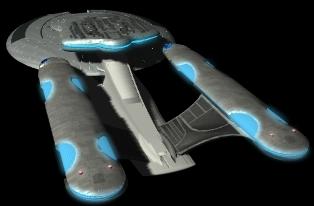 One of Starfleet's newest designs, as well as the single largest design currently fielded by Starfleet is
the massive Magellan class explorer. As much floating community as starship, the Magellan
class vessels are tasked with very long range, very long duration exploration on the rim of Federation
space. While these massive ships are not particularly effective combatants, they are heavily armed with
defensive weapons and are more than capable of repulsing attacks. Where the Magellans truly show their
strength, however, is in long-term scientific research, study, and exploration. A single Magellan class
ship can sweep fifty sectors of space in two years, the minimum cruise lengths on these enormous flying
starbases.
One of Starfleet's newest designs, as well as the single largest design currently fielded by Starfleet is
the massive Magellan class explorer. As much floating community as starship, the Magellan
class vessels are tasked with very long range, very long duration exploration on the rim of Federation
space. While these massive ships are not particularly effective combatants, they are heavily armed with
defensive weapons and are more than capable of repulsing attacks. Where the Magellans truly show their
strength, however, is in long-term scientific research, study, and exploration. A single Magellan class
ship can sweep fifty sectors of space in two years, the minimum cruise lengths on these enormous flying
starbases.
The Magellan was a controversial class -- the expense in constructing the prototype was nearly three times
expected, which itself was the same amount of materials needed for a pair of Galaxy class explorers. There
are many in the Admiralty who doubt the utility of these vessels, and it remains to be seen whether they
will prove themselves over the long term. Currently, there is only one other Magellan class ship in
Starfleet other than the prototype.
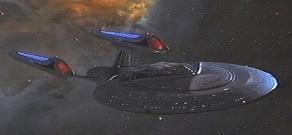 Finally, and most impressively, the Sovereign class explorer is the premiere Starfleet vessel.
Combining everything learned up to this point about starship design, fitting, refurbishing, maintenance,
and survivability, the Sovereign class is an outstanding example of Starfleet technology at its finest.
It is simply an incredible vessel, doing nearly everything well. It is an outstanding first-tier explorer,
with the finest sensor array and science and research capability ever designed into a Starfleet vessel.
Finally, and most impressively, the Sovereign class explorer is the premiere Starfleet vessel.
Combining everything learned up to this point about starship design, fitting, refurbishing, maintenance,
and survivability, the Sovereign class is an outstanding example of Starfleet technology at its finest.
It is simply an incredible vessel, doing nearly everything well. It is an outstanding first-tier explorer,
with the finest sensor array and science and research capability ever designed into a Starfleet vessel.
Sovereigns are also relatively simple to construct and easy to maintain. Its weapons array and defenses
include very high power phasers, quantum torpedoes, extremely advanced shields, and ablative armor. It is
maneuverable out of all proportion to its size. Its crew requirement -- 700 -- while large, is acceptable
for the Exploration branch that is its primary contractor. Sovereigns have also been considered by the
Military branch of Starfleet.
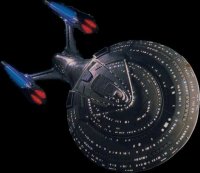 The Sovereign's size is smaller along the critical ventral/dorsal line than virtually any other
cruiser-size starship designed by Starfleet in the last century. This allows ease of maintenance in
standard Starfleet facilities. Though still very few in number in Starfleet, the Sovereign class has
been very successful, and have borne out the expectations of her designers. Not only have the
initial tests of this beautiful vessel proven out, but her interior appointments make contemplation of a
long exploratory cruise aboard her a pleasurable one. Threat forces will think twice before taking one
on, and she is able to respond to trouble quickly. As effective an explorer as a Galaxy, as effecient a
combatant as a Defiant, as fast as an Intrepid... the Sovereign class stands ready to carry the dreams of
Starfleet into her third century.
The Sovereign's size is smaller along the critical ventral/dorsal line than virtually any other
cruiser-size starship designed by Starfleet in the last century. This allows ease of maintenance in
standard Starfleet facilities. Though still very few in number in Starfleet, the Sovereign class has
been very successful, and have borne out the expectations of her designers. Not only have the
initial tests of this beautiful vessel proven out, but her interior appointments make contemplation of a
long exploratory cruise aboard her a pleasurable one. Threat forces will think twice before taking one
on, and she is able to respond to trouble quickly. As effective an explorer as a Galaxy, as effecient a
combatant as a Defiant, as fast as an Intrepid... the Sovereign class stands ready to carry the dreams of
Starfleet into her third century.
Thank you for reviewing this informational file on the United Federation of Planets Starfleet! We hope
you have found this document interesting and enlightening. If you have any questions about your
Starfleet, please feel free to contact the Starfleet Field Office in your area. The officers at these
stations can answer any questions you have about Starfleet vessel provisioning, potential civilian
contracts, ships in your area, local "Fleet Weeks," and of course, recruitment. Starfleet also welcomes
Federation citizens to contact their Council member about Starfleet appropriations!
Thanks again for your time; see you in the final frontier!
Once you're done here, tap
Back
to return to the Coronado Setting information index or the
Return
key at the bottom of your PADD, and you will be returned to the main index.
|






 Star Trek®,
Star Trek: The Next Generation®, Star Trek: Deep Space Nine®, and Star Trek: Voyager®
are registered trademarks of Paramount Pictures
in the United States Patent and Trademark Office. Use of this site constitutes your
acceptance of these terms of use.
Star Trek®,
Star Trek: The Next Generation®, Star Trek: Deep Space Nine®, and Star Trek: Voyager®
are registered trademarks of Paramount Pictures
in the United States Patent and Trademark Office. Use of this site constitutes your
acceptance of these terms of use.
 © Copyright 2002,